Products Description
A greenhouse tractor operates within a working environment shaped by crop rows, planting beds, greenhouse structures, access routes, and agricultural implements.
Compared with open-field work, the available operating space inside a greenhouse can be more closely defined by the crop layout and the structure of the growing facility. Tractor width, wheel track, overall height, wheelbase, turning space, PTO configuration, hydraulic capacity, and implement dimensions may all affect whether a tractor can work effectively in a particular greenhouse.
For this reason, a greenhouse tractor is not simply a smaller version of a field tractor. Its configuration needs to correspond to the actual working space and agricultural operations inside the greenhouse.
Tractors for Protected-Crop Production
Greenhouse operations can include soil preparation, bed preparation, cultivation, spraying, material handling, crop maintenance, and other field tasks adapted to protected cultivation.
The tractor required for these operations depends on how the greenhouse is arranged.
A tractor working between crop rows may need a different configuration from one used mainly for soil preparation before planting. Similarly, a tractor operating in a large greenhouse with wide internal aisles may have different dimensional requirements from one working in a more restricted planting layout.
The main considerations include:
- Crop and row arrangement
- Working clearance between crop rows or beds
- Tractor width and wheel track
- Greenhouse entrance dimensions
- Internal aisles and headland space
- Crop canopy and mature plant size
- Greenhouse height and overhead structures
- Wheelbase and turning space
- PTO and hydraulic requirements
- Implement width, weight, and mounting requirements
These factors should be considered together rather than selecting a tractor based only on horsepower.
Crop Layout and Working Clearance
The physical arrangement of the crop is one of the first factors to consider when configuring a greenhouse tractor.
Row spacing describes the distance between crop rows, but it does not necessarily represent the actual space available for the tractor.
Crop canopy, planting beds, irrigation equipment, support structures, and the position of the tractor wheels can all reduce the usable working corridor.
For example, a tractor may technically fit within a row spacing dimension while still leaving insufficient clearance for the tires, attached implement, or mature crop canopy.
The working space should therefore be considered as the complete operating corridor rather than as a single row-spacing measurement.
This is particularly important for operations that require repeated passes through established crop rows.
Tractor Width and Wheel Track
Tractor width directly affects the space required between crops and beds.
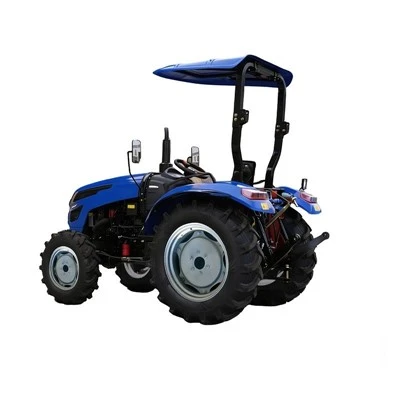
A narrow tractor configuration can be useful where the greenhouse provides limited working clearance. WOYE's 40HP narrow greenhouse tractor, for example, uses a 1260 mm narrow body and a 1470 mm wheelbase for operation in confined spaces.
However, tractor width should not be considered separately from wheel track and tire position.
The position of the tires relative to the crop rows determines where the tractor actually travels. Depending on the greenhouse layout, adjustable track width or an appropriate tire configuration may provide more practical clearance than simply reducing the overall body width.
The required dimensions should therefore be checked against the actual crop-row spacing, bed arrangement, tire position, and implement dimensions.
Greenhouse Structure and Tractor Height
The greenhouse itself can create dimensional restrictions that do not normally exist in open-field operations.
Before selecting a tractor configuration, the available clearance at entrances, internal passages, and areas with overhead structures should be considered.
Overall tractor height can become important where the greenhouse includes low entrances, support structures, crop-training systems, or other overhead components.
The tractor also needs to enter and exit the greenhouse without interference. Therefore, entrance width and height should be considered together with the tractor's overall dimensions.
For operations involving established crops, the height and spread of the crop canopy may also influence the usable working space.
Wheelbase, Steering and Turning Space
Greenhouse work often involves repeated changes of direction within limited space.
Wheelbase, steering configuration, turning radius, and the available headland area can therefore affect how easily a tractor can reposition at the end of a working pass.
A shorter wheelbase may provide an advantage in restricted spaces, but turning performance also depends on the steering system, tire configuration, implement dimensions, and the actual headland layout.
For this reason, the available turning space should be evaluated together with the tractor rather than relying only on a published turning-radius figure.
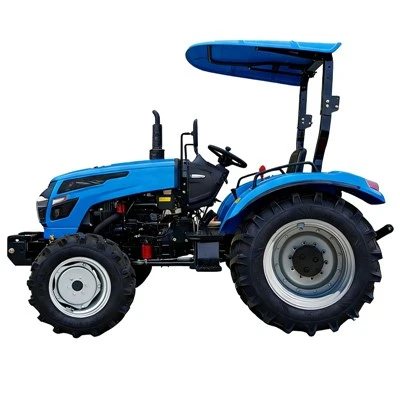
WOYE's 25HP tractor, for example, has a 1680 mm wheelbase, while the 40HP narrow greenhouse model uses a 1470 mm wheelbase. These configurations illustrate that greenhouse-oriented tractors can use different chassis dimensions depending on their intended working environment.


PTO, Hydraulics and Implement Compatibility
A greenhouse tractor is normally part of a working system that includes agricultural implements.
The tractor therefore needs to provide suitable PTO, hydraulic, and three-point hitch configurations for the equipment used in the greenhouse.
Typical operations may involve:
- Soil preparation
- Rotary tilling
- Bed preparation
- Cultivation
- Spraying
- Light material handling
- Other crop-maintenance operations
The appropriate tractor configuration depends on the implement's working width, weight, PTO requirement, hydraulic requirement, and mounting system.
For example, WOYE's 25HP tractor uses a 540/720 rpm PTO and one hydraulic output group, expandable to two groups. Its three-point hitch and PTO arrangement allow it to be configured for a range of agricultural implements, subject to implement specifications and tractor configuration.
The implement should therefore be considered together with the tractor rather than selected separately.
Power Configuration for Greenhouse Operations
Horsepower remains an important part of tractor selection, but it should be considered in relation to the actual operation.
A lower-power compact tractor may be appropriate for lighter greenhouse work where the main requirements are maneuverability, soil preparation, or crop maintenance.
Higher-power configurations may become relevant when the tractor needs to operate heavier implements, provide greater hydraulic capacity, or perform more demanding work.
WOYE offers compact tractor configurations across different power classes, allowing the tractor to be matched to different greenhouse layouts and operating requirements.
The 50HP class can be considered where a greenhouse operation requires more capacity than a small compact tractor while still requiring a configuration suitable for restricted agricultural environments.
The correct power level ultimately depends on the implement, soil conditions, working depth, required operating speed, and the available working space.
WOYE Greenhouse Tractor Configurations
WOYE provides tractor configurations that can be adapted to different protected-crop working environments.
Depending on the application, configurations may include:
- Compact and narrow-body tractors for restricted working corridors
- Four-wheel-drive configurations for traction requirements
- Different PTO speed options
- Hydraulic systems for compatible implements
- Three-point hitch systems
- Different wheel and tire configurations
- Different power classes for different implement requirements
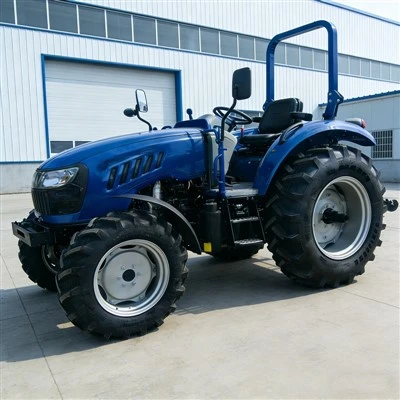
For example, WOYE's compact tractor range includes a 25HP 4WD model with an 8F+2R transmission, 540/720 rpm PTO, 1680 mm wheelbase, and 310 mm ground clearance.
The 40HP narrow tractor is configured with a 1260 mm body width and 1470 mm wheelbase, specifically providing a more compact configuration for restricted working environments.
Other power classes, including 50HP and larger configurations, can be considered when the greenhouse operation requires greater implement capacity or working power.
The final configuration should be determined according to the greenhouse dimensions, crop layout, working conditions, and implement requirements.
Greenhouse Tractor Applications
Greenhouse tractors can be used for different stages of protected-crop production, depending on the tractor and implement configuration.
Soil Preparation
Compact tractors can be configured for rotary tilling, soil preparation, and related operations before or between crop cycles.
The required tractor power and implement width depend on soil conditions, working depth, and the available working corridor.
01
Crop Maintenance
Where row spacing and crop clearance allow, tractors can be used for cultivation, spraying, and other crop-maintenance operations.
The tractor and implement dimensions should be matched to the established crop layout to maintain sufficient working clearance.
02
Material Handling
Some greenhouse operations require the movement of materials, supplies, or agricultural inputs.
Where the tractor configuration and implement are suitable, compact tractors can be used for selected transport and material-handling tasks within the greenhouse or between greenhouse areas.
03
Bed and Inter-Row Operations
For greenhouses using defined beds or permanent crop rows, tractor dimensions and implement width need to correspond to the existing layout.
The working corridor should provide sufficient clearance for the tractor, tires, implement, and mature crop canopy.
04
Greenhouse Tractor Configuration for Your Operation
There is no single greenhouse tractor configuration that fits every protected-crop operation.
The appropriate tractor depends on the physical layout of the greenhouse and the work that the tractor needs to perform.
When discussing a greenhouse tractor configuration with WOYE, the following information can help determine a suitable setup:
- Crop type
- Row or bed spacing
- Required working clearance
- Greenhouse entrance width and height
- Internal aisle and headland dimensions
- Crop height and expected canopy development
- Soil conditions
- Main agricultural implements
- Implement working width and weight
- Required PTO speed
- Hydraulic requirements
- Required lifting capacity
- Four-wheel-drive requirements
- Tire and wheel-track requirements
Based on these details, the tractor configuration can be evaluated according to the actual working environment rather than by horsepower alone.
WOYE can discuss the appropriate tractor configuration according to the greenhouse layout, operating conditions, and implement requirements.
Hot Tags: compact greenhouse tractor, China compact greenhouse tractor manufacturers, factory